
VINES, PEOPLE, AND TIME…
Château des Annereaux, set in the heart of the Lalande de Pomerol appellation, carries more than six centuries of family heritage and winegrowing tradition. Handed down through generations since 1390, the estate unites history and modern craftsmanship to produce wines that faithfully reflect our distinctive terroir of gravel, sand, and clay.
Certified organic since 2010 and B Corp since 2023, the château is deeply committed to sustainable and environmentally conscious viticulture. Bird and bat boxes, hedgerows, beehives, fruit trees, and solar panels all demonstrate our long-term effort to protect biodiversity and reduce our carbon footprint.
Every day, our dedicated team works to create wines of finesse, balance, and authenticity, while contributing to a more responsible and caring future. At Château des Annereaux, each bottle carries a story — a story of a family, a landscape, and a commitment.
-
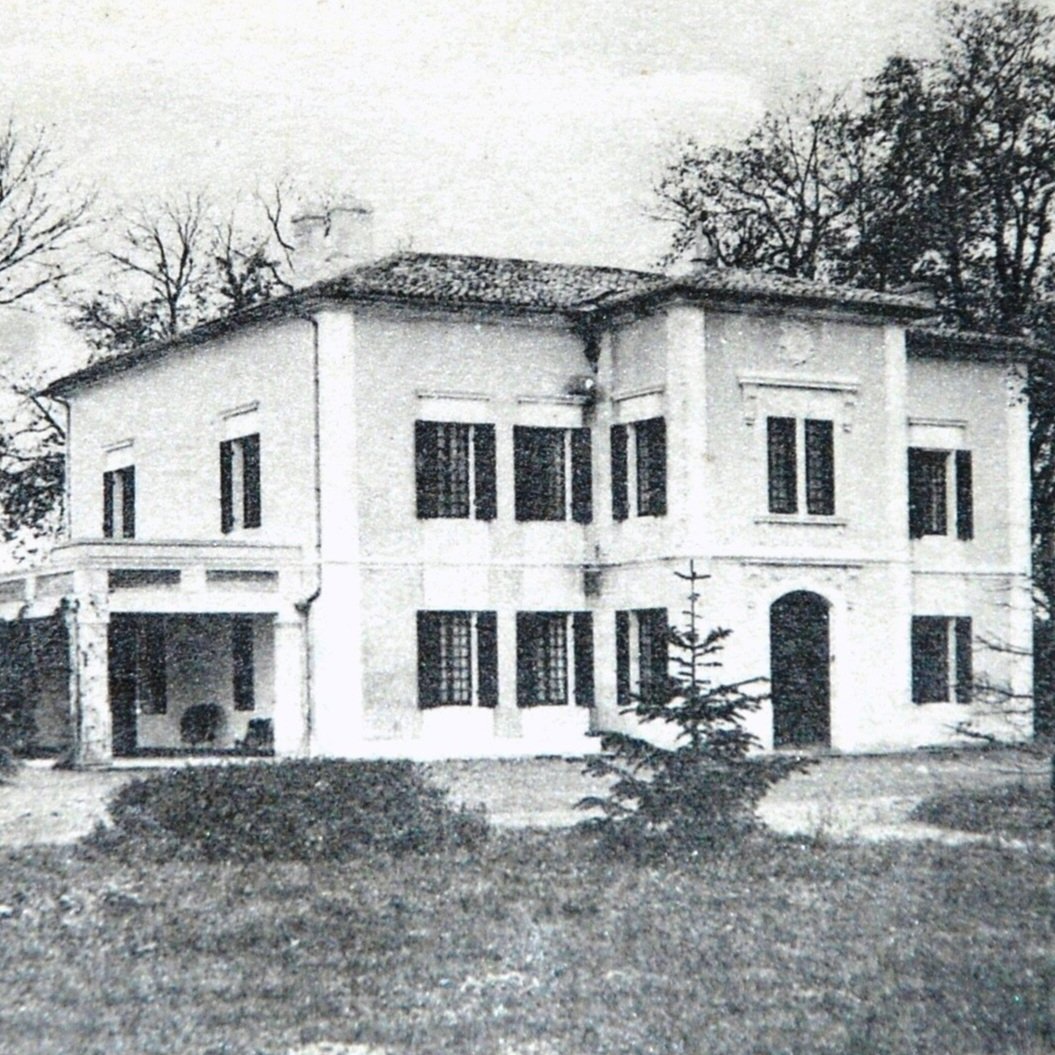
![Carte postale historique du Château des Annereaux datant de 1910, montrant le domaine viticole à Lalande de Pomerol]()
Le Château - 1910
-
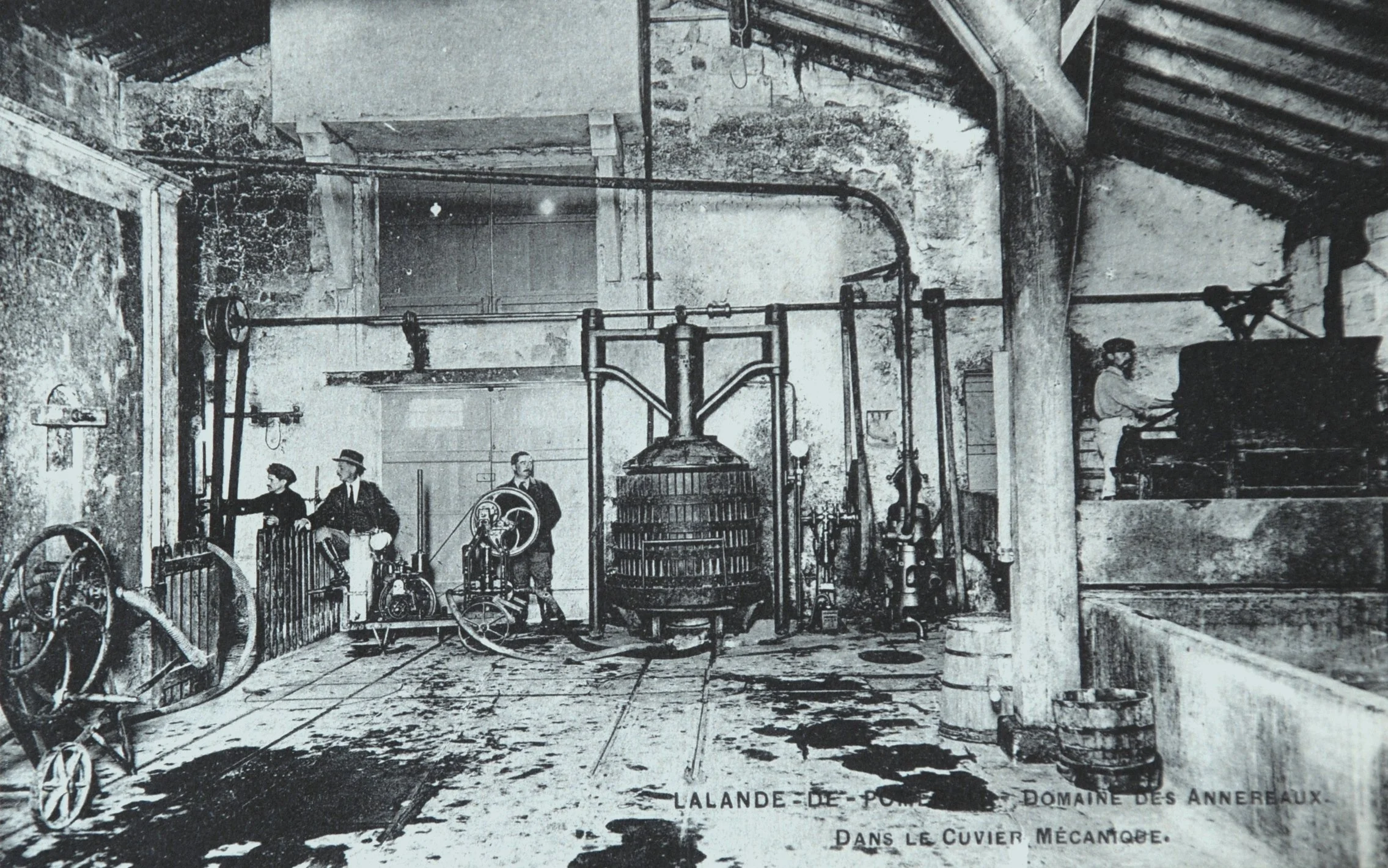
![Vue du cuvier du Château des Annereaux en 1911, montrant les installations historiques de vinification à Lalande de Pomerol]()
Cuvier - 1911
-
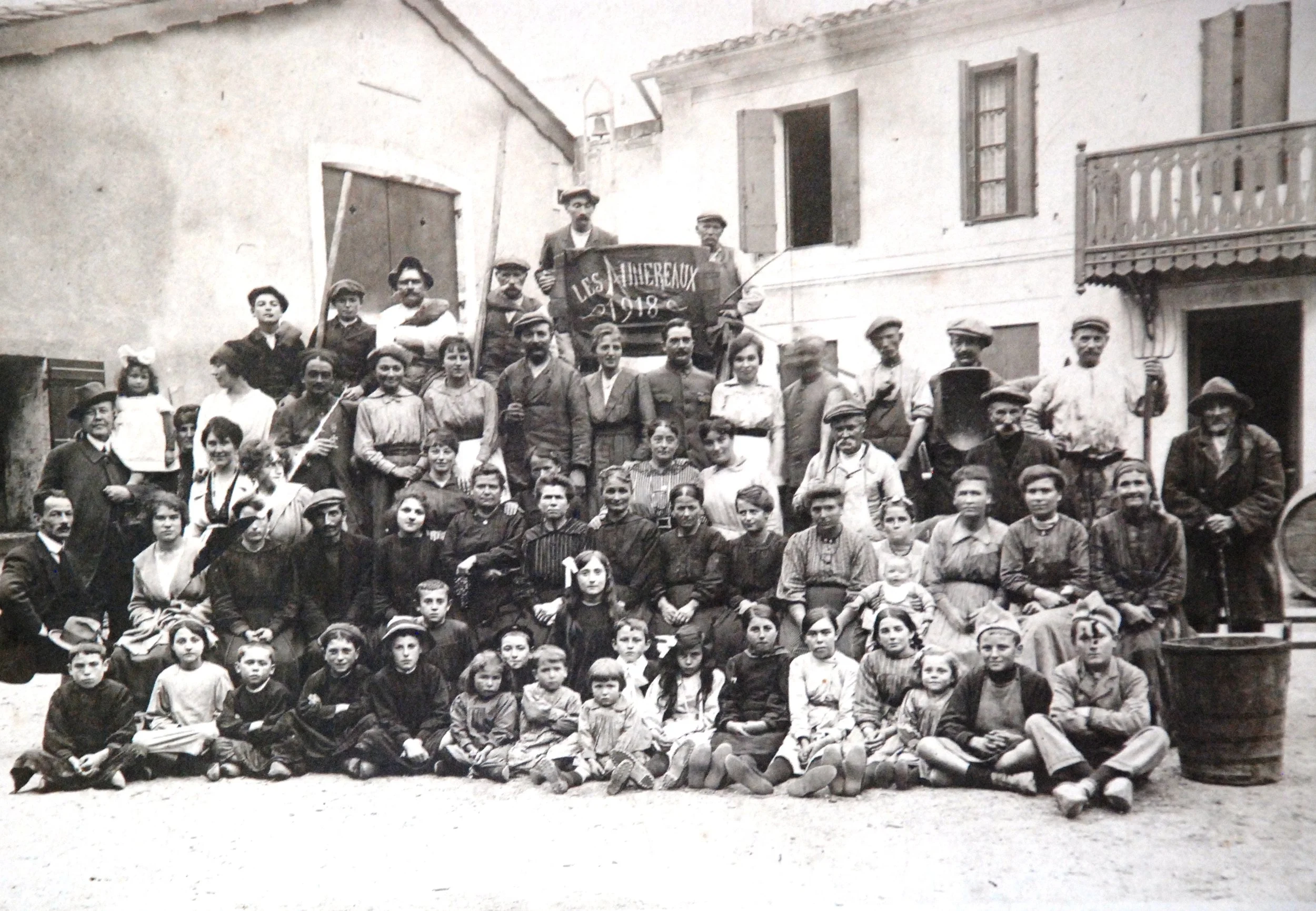
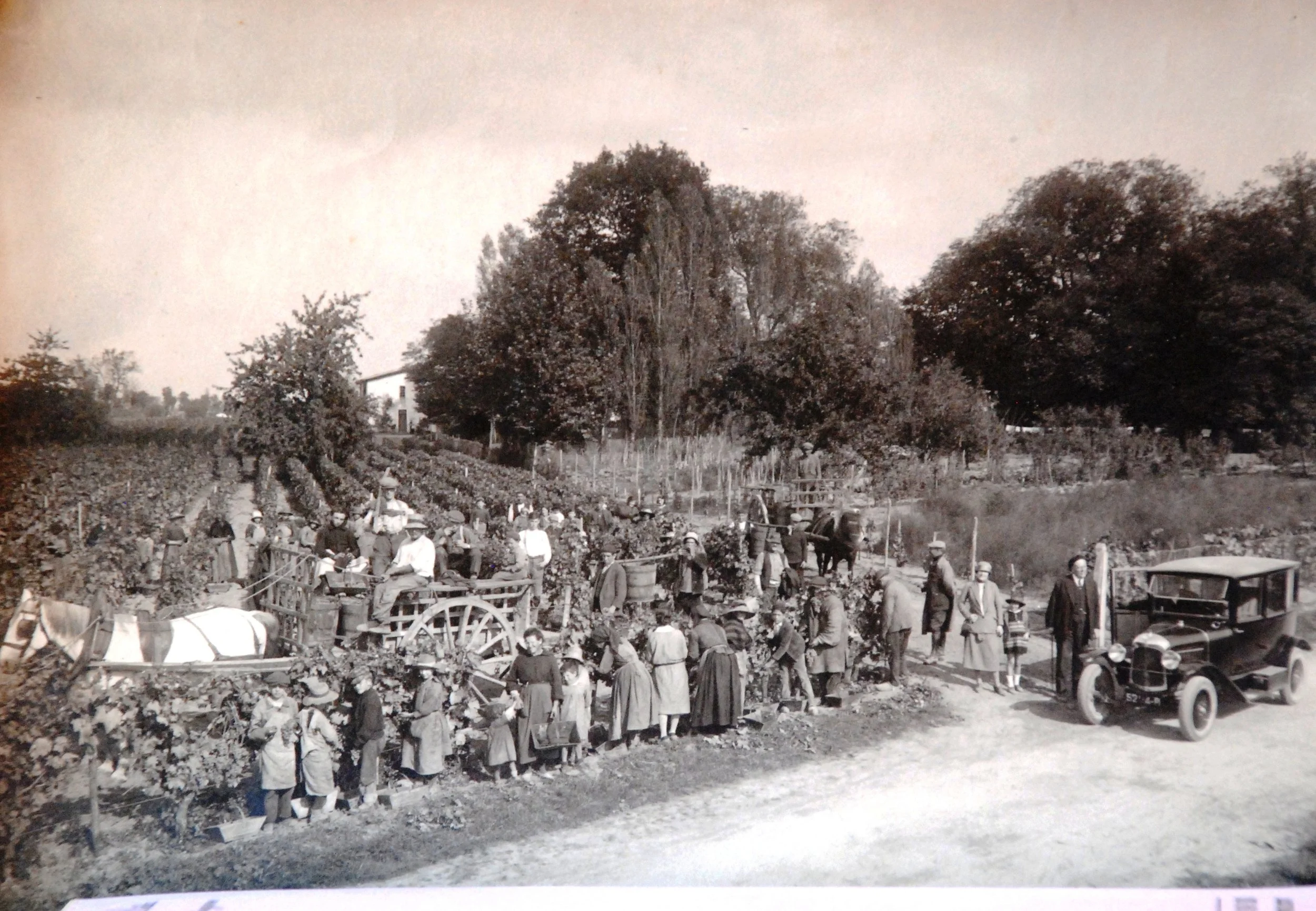
![Photographie des vendanges en 1918 au Château des Annereaux, un domaine viticole historique à Lalande de Pomerol.]()
Vendanges - 1918
-
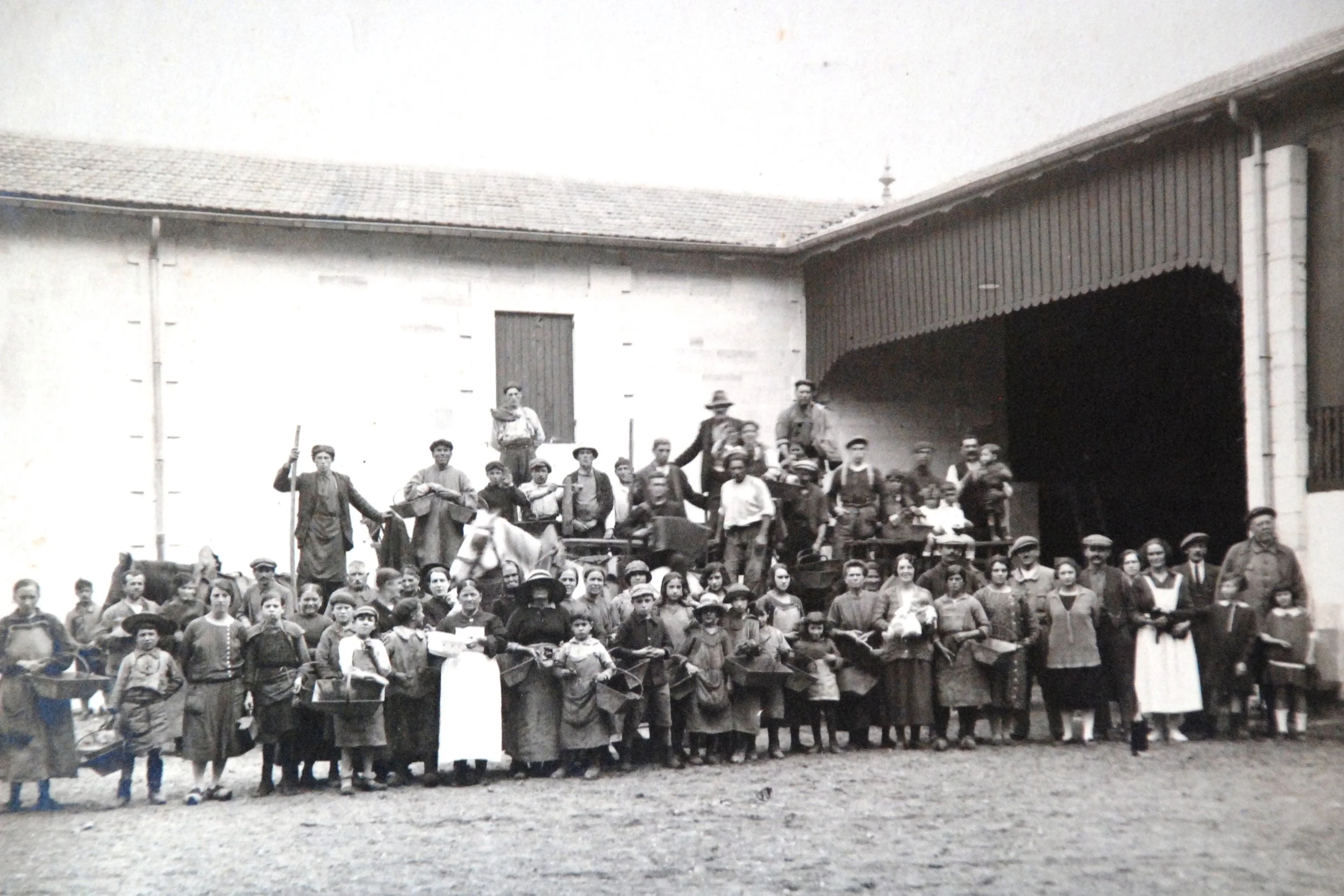
![Photographie des vendanges en 1925 au Château des Annereaux, un domaine viticole historique à Lalande de Pomerol.]()
Vendanges - 1925
-
![Photographie des vendanges en 1929 au Château des Annereaux, un domaine viticole historique à Lalande de Pomerol.]()
Vendanges - 1929
Key Dates
1390 - First Records of the Annereau Family
The Annereau family is among the oldest recorded in the region. A remarkable document written in Gascon and addressed to the Commander of the Temple confirms their presence in Lalande en Poumeyrou as early as 1390.
1598 – Construction of the Annereaux Manor
1598 marks the probable construction of the original residence, referred to as the “manor” in various legal documents. It was later remodelled several times in the early 19th and then 20th century.
In 1660, Marguerite Annereau married André Malescot. From then on, the estate was passed down through the female lineage, which explains the succession of family names. For more than two centuries, the Malescot family managed the Annereaux and played an active role in the region’s social, political, and religious life.
1660 – Beginning of the Malescot Era
1818 – Expansion of the Estate
With the family growing and social life expanding, the manor was improved and extended. The building was heightened by an additional floor during this period.
Suzanne Malescot married Jean Frédéric Soehnée, an industrialist and banker from Landau whose family included several distinguished figures: Jean Michel, one of the first auditors of the Banque de France, and Charles Frédéric, an artist who created a varnish that bears his name and produced paintings of which several examples are held at the Louvre.
1824 – The Soehnée Era
Caroline Soehnée, widowed at a young age, took over the estate during the devastating phylloxera crisis. She chose the side of the “Americanists,” supporting grafting techniques against the “chemists” who favoured carbon disulphide treatments. She led rigorous scientific trials on grafting and rootstocks, shaping the vineyard’s future.
1873 – The Fight Against Phylloxera
Construction of a new mechanical, “ultramodern” winery by Armand Ponsot, son of Caroline Soehnée. The concrete vats he installed — now renovated — are still in use today.
1911 – A New Winery
1912 – The Château
The residence, originally a manor, was redesigned to resemble an Italian villa with its distinctive pink façade. It has since been known as “the château.”
After the hardships of war and economic difficulties, frost devastated large parts of the vineyard. Compensation grants encouraged uprooting, and Charles Rulleau, the owner at the time, decided to remove the vines entirely (35 ha). Attempts to cultivate corn on the poor soils failed, marking a difficult period for the estate.
1956 – Dark Times
1961 – The Aborted Sale
A sale was considered. The mayor of Libourne, Robert Boulin, planned to create an agricultural school and wished to acquire the estate for that purpose. Negotiations failed, and the school was eventually built elsewhere.
1969 – Rebirth of the Vineyard
Deeply attached to their roots, the family sought a solution to revive the property. Jean Milhade, winegrower and merchant, purchased half of the estate, while Madame Jacques Hessel (Claude Rulleau) retained her share. Replanting of the vineyard began shortly thereafter.
2004 – Domaine familial reconstitué
The heirs of Jean Milhade, still holding half of the estate, decided to part with their share. Dominique and Marie-Hélène Hessel bought it back, restoring the unity of the family domain.
2010 - First Certified Organic Vintage
After three years of dedicated work toward organic practices, the 2010 vintage proudly bore the organic (AB) certification.
2013 – A New Chapter
Benjamin, son of Marie-Hélène and Dominique, joined the estate for the 2013 harvest and became manager of Château des Annereaux.
2014 – A Major Renovation
Significant renovation work was undertaken: winery, vat room, storage areas, and offices were modernised and upgraded.
Château des Annereaux became the first Bordeaux wine estate to earn B Corp certification, meeting rigorous standards of social and environmental performance, transparency, and accountability.